

“They imagine that a civilization can be revived by altering its machinery, when in truth the machinery is only the expression of the men who operate it. When those men have lost their vigour, the civilization is already dead in all but name.”
— Ludovici, The Lost Philosopher
There is a wave of European national sentiment sweeping across the continent. A telling initiative is the “Save Europe” act: close the borders and remigrate the immigrants!
While this may seem like a very common-sense approach to running a basic country, it reveals worn-out sentiments and a desire to save something that has already been lost.
The Europe they want to save is dead.
Nothing of the European greatness to which they defer exists anymore. Their experience is like phantom pain—a tingling sensation in a severed limb.
Europe has been ravaged by a plethora of destructive ideas: liberalism, free-market capitalism, humanism, progressivism, and a host of other ill-conceived -isms. Europe’s immune system was weakened by post-WWII liberalism, leaving it vulnerable to all the other infections that followed.
As a result, Europe no longer exists as anything other than a vague geographical demarcation, whose borders are not even properly defended, while there is an ongoing rush to include more nations within it.
What is left to save?
The abhorrent commercialism of international megacorporations like McDonald’s or Starbucks? The sanctification of the shopping mall? The vile and anti-human capitalization of every aspect of our lives, including our health?
Or perhaps democracy—where every halfwit and intellectually minimally gifted citizen can cast their meaningless vote?
Or the “long-overdue” sexual emancipation of our women, so that we now glorify women who have sex with over a thousand men in a single day?
No.
The Europe of today has little in common with what we think Europe is. The fact that we live among the relics of the past does not mean we are worthy of their inheritance. In fact, we are expressly not.
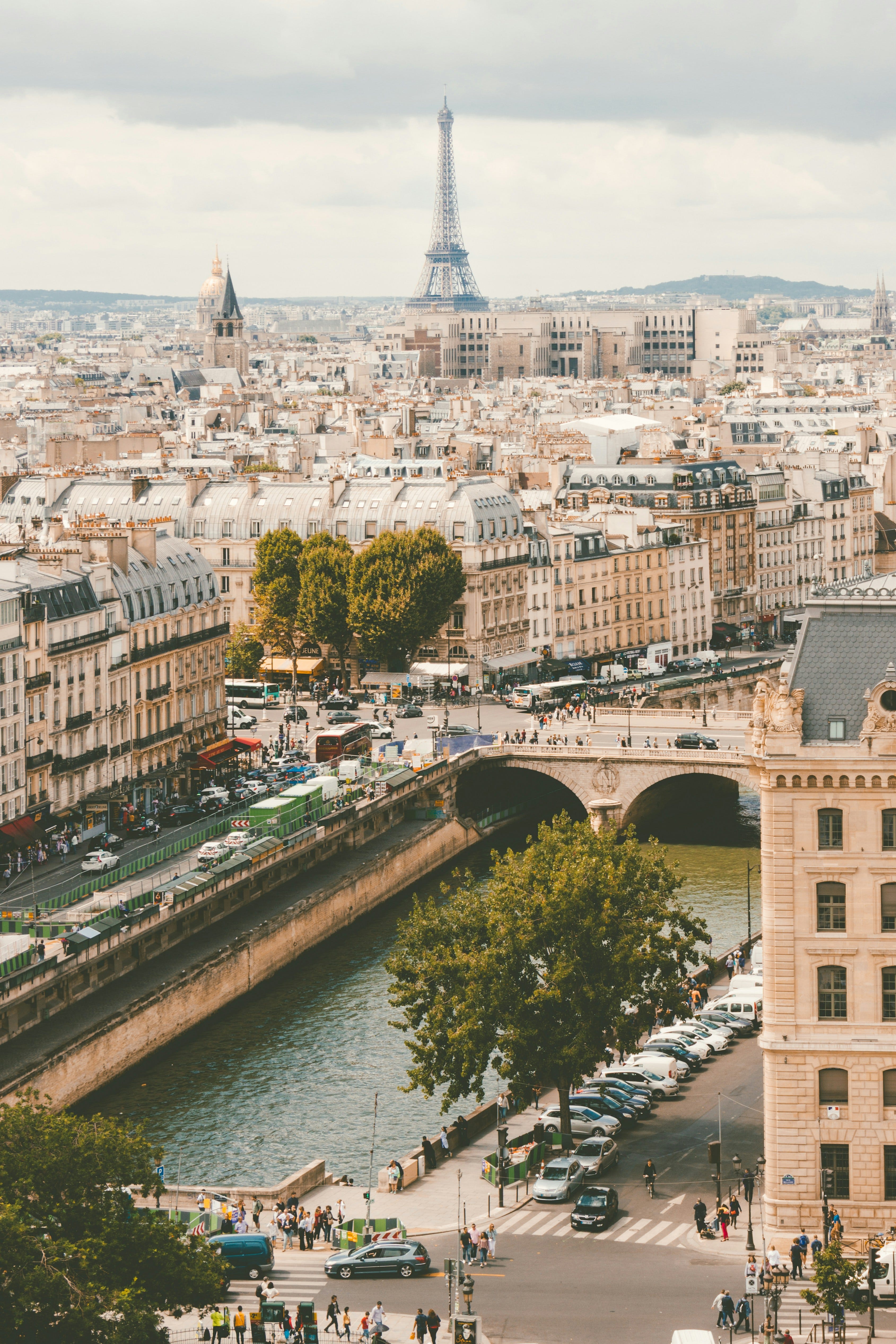
The Europe that speaks to us through its classical architecture, its magnificent statues, its art, music, and outlook is not the result of democracies and the rule of the mass man. That Europe is the result of tradition-oriented societies.
The traditional rulers wanted to create great things and commissioned the greatest artisans to create them. Nothing they did was motivated by real-estate development or the hunt for leasable square footage. They built at great expense to their treasuries, without any obvious economic benefit.
Most of the poor in Europe gained little in terms of material wealth from these projects. But greatness was created, and we still enjoy it to this day.
Culture and Civilization
Culture reflects the soul of a civilization, and the remnants of European culture speak of greatness because its rulers wanted Europe to reflect their achievements and their tastes as aristocrats.
The Europe that our children shall inherit speaks instead of Marcusean one-dimensionality, morbidly pathological capitalist saturation, soullessness, sterility, and a perverse sense of acquiescence to its own dissolution.
An unintelligible mess of hedonism, nihilism, antinatalism, and substandard factory-farmed, chemically laced, Roundup-sprinkled, genetically modified lettuce and plastic-cheese hamburgers, washed down with a soy-decaf-latte-oat-milk-vegan-double-caramel monstrosity.
Blood, Birth, and Greatness
The very idea that the basis of a folk or a nation—not a nation-state—is the blood relations of its members seems to be totally lost on Europeans.
The greatness of Europe is the result of the blood of the European peoples. And what is imperative to understand is the role of nature in this matter.
The talent that built and designed all of this European greatness is exceedingly rare. In order to have many talented people in a culture, there must be a high birth rate, for obvious mathematical reasons.
And European birth rates, just as in almost all of the world, have plummeted. Not only have they fallen below replacement level; there is also a wave of antinatalist thinking sweeping across European nations, fueled by the relentless poison of climate alarmism, feminism, and the idea that “kids are expensive and don’t fit my schedule.”
Couple this with radical egalitarianism, and we have a dwindling society that muzzles the one hope of getting out of this mess: its best and brightest.
The only thing capable of reviving the Europe of old is an aristocratic Europe in which the working class has to pay taxes so that the rulers can spend money on beauty for beauty’s sake.
Free-market capitalism will never produce beauty without profit. Building gorgeous public spaces is a public good, a commons, and offers no such reward.
It is the global infection of capitalism that has caused all skylines to look alike: sterile, uninspired, box-shaped, and efficient.
Ludovici, from A Defence of Aristocracy:
“Only an aristocracy can undertake works whose fruits lie far beyond the lifetime of their builders.”
The old Europe was not about being efficient, and some things were undertaken precisely because they were difficult.
Painting the Sistine Chapel took years of backbreaking work on questionable scaffolding. Taping a banana to a canvas takes five minutes.
That is basically the difference between the old and the new Europe.
Who is going to build immense works of beauty when they take decades to complete, when cabinets rarely fulfill their terms?
What is to be expected of men in suits?
How cognitively disjointed must one be to expect a revival of a Europe of fundamentally noble genesis to come from an epoch so drenched in humanist ideas of equality?
No society can rise above the level of its selectors.
Ludovici, from The Quest for Human Quality:
“The modern world is organized against the emergence of superior individuals.”
Perhaps, then, the problem is not that Europe lacks the right policies. Perhaps it lacks the kind of men capable of creating a civilization worthy of the name.
We do not need merely better administrators, more efficient institutions, or another political programme. We need men who once again aspire to greatness—and a social order willing to recognize, cultivate, and serve them.
You cannot save a civilization by repairing its machinery when the men operating the machinery no longer possess the qualities that made the civilization possible.